
Fiber Optic Installation in San Francisco CA
We install single-mode and multimode glass for commercial buildings and data centers: riser backbones between floors, plenum runs through ceilings, underground links between buildings and pre-terminated trunks between racks.
Need fiber optic installation in San Francisco CA? As a C-7 licensed low voltage cabling contractor, we plan the route, set innerduct and conduit, pull each cable within its rated tension and bend radius, and leave every run labeled and ready to splice or terminate. Glass is far less forgiving than copper, so the way it’s pulled decides how well it performs for the next 20 years.
Need a new backbone, a campus link or more strands? Get a site survey and itemized quote. Call (628) 215-7235.
Request a quoteOptical Runs for Every Part of Your Network Infrastructure
Each type of run has its own cable, rating and pathway. We match all three to the route before ordering material.
-
Riser and backbone runs
Multi-strand single-mode or multimode run vertically between the MDF and each IDF, pulled through riser sleeves in innerduct, firestopped at every floor and supported so its own weight never strains it.
-
Plenum and horizontal runs
Optical strands routed through air-handling ceilings to zone enclosures, labs or high-bandwidth workstations, using plenum-rated jacket as code requires.
-
Outside plant and campus links
Loose-tube or armored cable pulled through underground conduit and vaults between buildings, with outdoor jacket transitioned within 50 ft of the entry point.
-
Data center and MTP trunks
Pre-terminated MTP/MPO trunks between racks and rows in data centers and server closets, sized to length so they drop straight into cassettes for 40 and 100 Gbps uplinks.
-
Carrier and demarc extensions
Single-mode strands extended from where internet and telecommunications providers enter the building to your MDF, coordinated with each carrier and the building engineer.
-
Additions and reroutes
New strands added to an existing backbone, damaged runs replaced, and routes moved around tenant improvements or construction.
How We Pull and Protect Optical Cable
Glass can carry 100 Gbps for kilometers, but a single kink or an over-tensioned pull adds loss that never goes away. We set innerduct or conduit first so the strands have a protected path, then pull with a tension-limiting grip or swivel attached to the strength members, never to the jacket or the glass.
Throughout the pull, we hold the bend radius to at least 20 times the jacket diameter under tension and 10 times once it’s at rest, as TIA-568.3 recommends. In risers, each run is supported at every floor, and every sleeve is firestopped. At both ends, we coil a service loop of slack in the enclosure or on the ladder rack, so future splicing, reterminations or rack moves don’t require a new pull.
Every run is labeled at both ends and at pull points with its source, destination and strand count, so the splicing and termination crews know exactly what they’re working with. Careful route design up front is what keeps installations like these on budget.
| Construction | Typical rating | Strand counts | Where we use it | Notes |
|---|---|---|---|---|
| Tight-buffered distribution | OFNR (riser), OFNP (plenum) | 2–144 | In-building backbones and horizontal runs | Easy to terminate directly with connectors |
| Loose-tube, gel-free | Outdoor or indoor/outdoor | 12–288 | Underground conduit between buildings | Must transition within 50 ft of building entry unless indoor/outdoor rated |
| Interlocking armored | OFCR / OFCP | 6–144 | Exposed runs, warehouses, rodent or crush risk | Metal armor must be bonded to ground |
| Pre-terminated MTP/MPO trunk | OFNP / LSZH | 12–144 | Server rows and rack-to-rack links | Factory-tested; ordered to exact length |
| Micro / bend-insensitive | OFNR / OFNP | 12–96 | Congested conduit and older risers | Smaller diameter fits where standard jackets won’t |
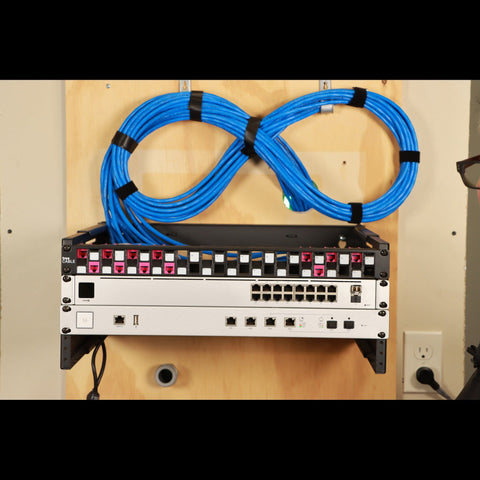
Pathways we work in
- Building risers and shafts
- Plenum ceilings
- Raised floors
- Underground conduit and vaults
- Campus duct banks
- Server rows
- Warehouse cable tray
- Historic masonry buildings
Installation Projects Across the City
Financial District riser backbones
Multi-floor OM4 and OS2 backbones pulled through shared risers in Market Street towers, scheduled around freight elevator bookings.
Mission Bay campus conduit
Armored single-mode strands pulled through underground duct banks between lab buildings, with outdoor jacket transitioned at each entry.
Dogpatch and Pier 70 conversions
Backbones routed through former shipyard and industrial buildings, where long open spans and thick masonry call for careful pathway planning.
SoMa server rooms
Pre-terminated MTP trunks between server racks, measured to length and dressed into cassettes for 100 Gbps switch uplinks.
Our Network Deployment Process
Route walk
We walk the route, check risers, conduit fill and vault access, and measure every run.
Strand count and loss budget design
We choose glass type, construction, rating and strand count, and calculate the loss budget each link must meet.
Pathway installation
Innerduct, conduit, sleeves and supports go in, with firestopping at every rated penetration.
Pulling and securing
Each cable is pulled under tension control, supported, coiled into service loops and labeled at both ends.
Splice, terminate and test
Strands are spliced or terminated in rack enclosures, then every one is certified with loss testing and an OTDR trace.
Related Fiber and Structured Cabling Services
Installation is the first step in a finished optical link, and our cabling services cover every step after it. See the full picture on our optical cabling overview.
- Fusion splicing: Pigtails, building entrances and repairs, with every splice protected in a tray.
- Connector termination: LC, SC and MTP/MPO connectors mounted in labeled enclosures.
- OTDR testing & certification: Tier 1 loss testing and Tier 2 OTDR traces for every strand.
Installation Service Area
We install optical backbones in every neighborhood of the city, plus these Peninsula, East Bay and Marin cities:
- Daly City, CA
- Tiburon, CA
- Alameda, CA
- Oakland, CA
- South San Francisco, CA
- San Bruno, CA
- Albany, CA
- Berkeley, CA
- Piedmont, CA
- Mill Valley, CA
See every location on our service area page.
Request an Installation Quote
Send the locations you need to connect, a floor plan or riser diagram, and we’ll schedule a walkthrough and return an itemized quote, usually within two business days. We work alongside general contractors and electrical contractors so the finished system passes inspection the first time.
San Francisco Telecom TechsOne Beach St, San Francisco, CA 94133
Phone: (628) 215-7235
Email: [email protected]
Get optical runs that are pulled right the first time and ready to splice.
Request a quote